
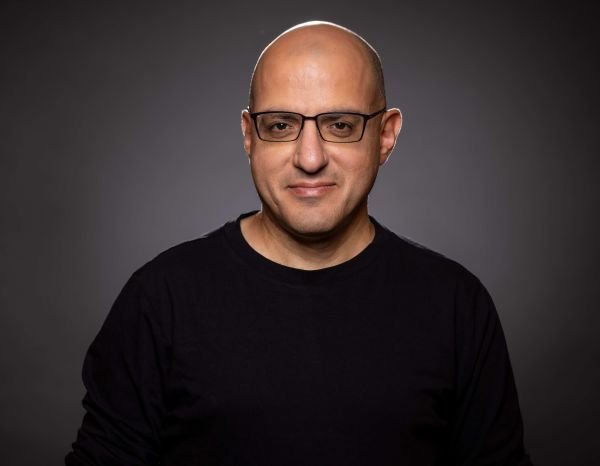
SandboxAQ says Switch helps organizations assess AI agent security, track costs and measure business outcomes.
SandboxAQ has expanded its Switch AI offering with two new products, Switch Trust and Switch ROI, designed to help organizations assess AI agent security, monitor performance and measure costs against business outcomes.
The additions build on Switch Rooms, an open-source offering that brings employees and AI agents together through shared, company-controlled context. Switch Rooms supports workplace tools including Slack, Microsoft Teams and Discord, allowing teams to work with different AI agents and models while retaining their shared context and history.
SandboxAQ launched Switch in August 2026. The company says its approach allows organizations to change AI agents, models and providers without losing the context and knowledge accumulated through their work.
Switch Trust: Security and Governance for AI Agents
Switch Trust provides tools to discover, assess and monitor AI agents across connected environments and code repositories. It covers four areas:
- Discover: Identifies agents, models, tools, Model Context Protocol (MCP) servers and dependencies, recording ownership, sources and security findings.
- Scan: Analyses agents in code and cloud environments for vulnerabilities, uses AI-assisted triage to help filter false positives, and recommends fixes.
- Evaluate: Tests agents against threats such as prompt injection, jailbreaks and data leakage. Organizations can also add their own evaluations.
- Monitor: Tracks agent activity, including prompts, responses, model calls and policy events. Guardrails can detect prompt injection, exposed secrets, personally identifiable information (PII), toxicity and jailbreak attempts, with options to block, redact, alert on or log unsafe activity.
SandboxAQ says agents operating within Switch Rooms are automatically covered by its guardrail policies.
Switch ROI: Tracking Agent Costs and Performance
Switch ROI helps organizations measure AI agent spending and compare it with the outcomes delivered. Its features include:
- Measure: Tracks spending and performance by agent, session and interaction, with budgets, spending-rate information and alerts. It can link costs to outcomes such as resolved support tickets, accelerated pull requests and automated tasks.
- Prove: Compares agent costs with measured outcomes using metrics such as cost per outcome and net return on investment (ROI).
- Optimize: Identifies potential savings from issues such as unsuitable model selection, unused tools, repeated context, excessive retries and unnecessarily long outputs. Recommendations include estimated monthly savings ranges and confidence levels.
The tools address a challenge for organizations deploying AI agents: determining whether they are secure, performing effectively and delivering sufficient business value.
Gartner has predicted that more than 40% of agentic AI projects could be cancelled by the end of 2027 because of factors including escalating costs, unclear business value and inadequate risk controls.
“More agents doesn’t automatically mean more value. We’ve seen this across many users: in cases where we thought agents could help avoid a net-new hire, the AI spend quickly became more expensive than hiring a full-time person,” said Mohammed Aboul-Magd, GM of Switch AI at SandboxAQ.
“That’s why ROI can’t just mean ‘we adopted AI.’ You need to know what every agent costs, what it delivers and how to make it better over time. That’s the problem Switch ROI is built to solve.”
Mount Sinai West Uses Switch Trust
Mount Sinai West’s MSW Lab is using Switch Trust as part of its work on G Board, a framework that enables physicians to develop clinical applications using AI agents.
“In the MSW Lab, physicians build real healthcare software with AI agents, so we have to prove those agents behave safely,” said Dr. Jeffrey Bander, Chief of Cardiology at Mount Sinai West and Associate Professor of Cardiology and Artificial Intelligence at the Icahn School of Medicine at Mount Sinai.
“Switch AI gives us a way to build that trust into how we work, so our physicians can focus on solving clinical problems without having to become AI security experts.”
SandboxAQ CEO Jack Hidary said organizations should be able to assess AI agents’ qualifications, costs and results, while retaining the ability to change agents and models without losing accumulated knowledge.
Disclaimer: This article is based on SandboxAQ’s official announcement and has been edited for length and readability. Product capabilities and the customer example are based on information provided by the company.
