
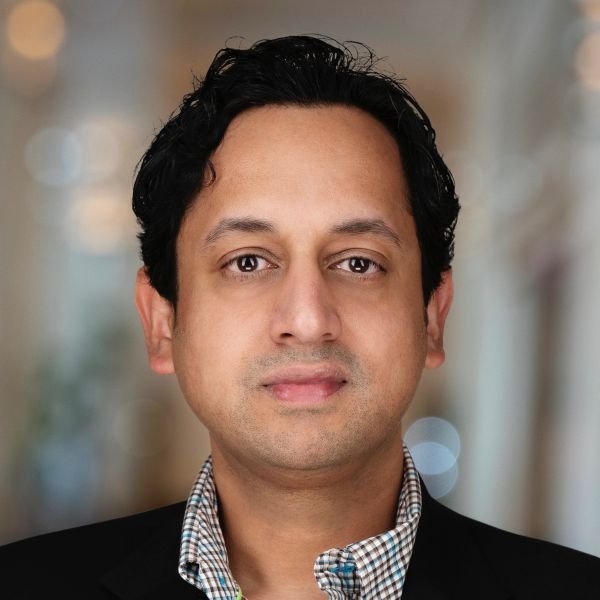
Jehan Wickramasuriya, Senior Vice President Security & Resilience Software at Motorola Solutions, explains why AI, open platforms, and incident-centric intelligence are becoming central to modern security strategies.
What are you showcasing at Intersec Dubai 2026, and how does this reflect your vision for security and resilience in an increasingly complex world?
At Intersec 2026, we’re showcasing two core pillars of our portfolio that together define our vision for modern security and resilience.
The first is our physical security portfolio, which Motorola Solutions is particularly well known for in this region. This includes our cameras, video management systems, and the broader software stack that supports physical security, from detection through to investigations. Within this, we’re demonstrating the full breadth of our camera portfolio, including long-range cameras capable of detecting objects up to 30 kilometers away, alongside the rest of our end-to-end physical security solutions that provide security from the furthest site perimeters to operational efficiencies within the walls of enterprises across multiple sites.
The second pillar, which we’re showcasing at Intersec for the first time, is our resilience solutions. These help organizations prepare for, mitigate, and recover from disruption. This includes incident management, business continuity, and operational resilience, essentially everything organizations need to remain functional and responsive to disruptions.
Across both portfolios, AI plays a significant role; not as a standalone feature, but as a foundational capability that weaves our solutions together and delivers greater value for our customers.
How does your security and resilience software help organizations move from reactive incident response to proactive risk prevention?
At Motorola Solutions, we’re trying to disrupt the traditional idea that security is purely about perimeter protection. Many organizations still consider security as something that starts at the fence or the front door. However, we’re also seeing risks and incidents occurring inside organizations, often because the connections between information, systems, and people need to be stronger.
For major industries in this region such as oil and gas or healthcare, there are many different roles operating within the same organization. Security teams may be well connected and monitoring cameras or access control systems. However, that tends to break down when managing an incident from end-to-end because it places a huge strain on resources. During these incidents, other parts of the organization outside of security teams may not be receiving data in a timely fashion. We’re also seeing security operations centers having to respond to very large numbers of “false positive” alarms which is wasting their time. We see a far greater role for AI, not only in detecting more events, but to help organizations actually learn from these incidents and get better at responding to them over time.
Understanding what happened, how it was handled, and how to improve for next time are all quite crucial steps. Without that learning loop, organizations can end up in a cycle of adding more hardware and software solutions, but remaining just as reactive as before.
How is Motorola Solutions using AI to deliver faster, more accurate decision-making for public safety agencies and enterprise operators?
We’re in a fairly unique position as a company because we serve both public safety agencies and enterprises at scale. Quite often, if something goes seriously wrong in an enterprise environment, public safety becomes involved. That means data, workflows, and decision-making need to align across both worlds.
Take healthcare as an example. We have large hospital deployments across the Middle East, facilities with hundreds of beds covering tens of thousands of square meters. You can’t have human eyes everywhere so these facilities use cameras and sensors powered by AI to organize all of that information, making it relevant and actionable.
AI can help to detect that someone isn’t wearing protective equipment on a factory floor. Beyond that detection, AI can understand patterns about how often these violations occur, where they happen, and what kind of training or intervention is needed to change behavior which is much more valuable.
By combining AI-driven orchestration with incident-centric workflows, response times improve by roughly a third. That has a real impact, whether it’s a more efficient public safety response or improved operational safety and risk posture inside an enterprise.
Does this require constant monitoring, or can these insights be searched and analyzed over time?
Traditionally, security systems have been built around two modes: real-time alerting and forensic search after the fact. With AI, that distinction is starting to blur.
Even the best search tools still require a human to know what they’re looking for. Rule-based analytics require you to predict the future, to define in advance what matters. That’s simply not realistic because incidents are unpredictable and rarely the same between different verticals and organizations. Today, users often have to choose between setting up new alerts or manually searching after an incident. We believe there’s a fundamental shift underway, where AI not only monitors but also proactively surfaces meaningful insights, aggregated trends, violations, and risks and presents them in a way that’s usable through dashboards and reports.
The goal is to reduce the cognitive and operational load on users, allowing them to verify and act on insights rather than constantly hunting for them.
How is Motorola Solutions supporting governments and enterprises to build secure, scalable, and future-ready security ecosystems?
Flexibility is key. Customers don’t want to be locked into a single deployment model as their needs evolve. That’s why we’ve always designed our systems around hybrid architectures.
Some workloads need to run at the edge or on-premises for reasons such as latency, bandwidth, data sovereignty, or privacy. We take a distributed approach to AI by running it on cameras, servers, and in the cloud where appropriate. Customers want the ability to process data differently as their requirements change.
Another critical demand is openness. Customers expect platforms that support interoperability, open standards, and zero-trust principles. As systems become increasingly connected, securing data both at rest and in transit becomes essential.
You mentioned open platforms and collaboration. What does that look like in practice?
Collaboration is fundamental. Our Avigilon Unity portfolio, which is widely used in this region, is supported by a technology partner ecosystem of more than 1,700 members. We integrate with third-party video management systems and access control platforms, including systems from competitors. AI is data-hungry. So, if access to data is limited, customers miss out on the benefits. Customers want freedom of choice and the ability to connect systems across their organization. That openness is essential for meaningful AI outcomes.
How do you see the concept of resilience evolving, and what role will software-driven intelligence play in the future of security?
Historically, resilience meant redundancy and failover, ensuring systems stay online even if something fails. That remains critical, and it’s something our customers rightly expect from us, especially given our heritage in reliable and trusted mission-critical networks.
But resilience today also means preparedness. Risk management has traditionally been a manual, siloed exercise, often disconnected from physical security systems. We see a significant opportunity to close that loop.
By connecting risk management, incident management, operations, and physical security, organizations can ensure that insights from one area inform decisions in another — from camera placement to analytics, rules and response protocols.
Resilience is no longer just about surviving failure. It’s about learning, adapting, and continuously improving. That feedback loop is what will define the next generation of security systems.
