
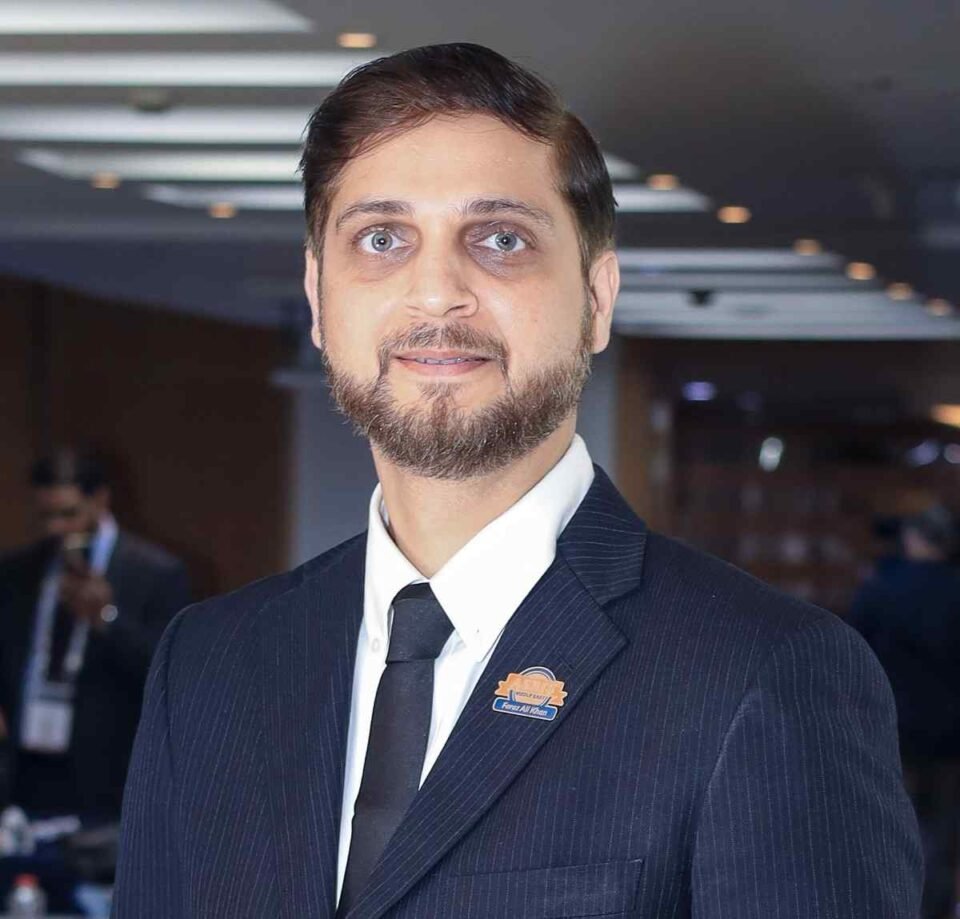
Faraz Ali Khan, Marketing Director at ASBIS Middle East, speaks with Techitup Middle East on the evolution of modern IT distribution and the role of channel marketing in the age of AI.
The Evolution of Value-Added Tech Distribution
Techitup ME: ASBIS has been a cornerstone of the MEA technology landscape for more than 25 years. How have you seen the role of technology distribution evolve from a volume-driven business into a broader technology ecosystem model?
Faraz Ali Khan: It has changed dramatically. Previously, distribution was largely volume driven. The focus was largely on product availability, logistics, pricing and ensuring partners could secure the right stock at the right time. The fundamentals are still important, but the distributor’s role is much more strategic and much broader.
Today, distribution is no longer just about getting products from vendors to resellers. It’s about creating a comprehensive technology ecosystem. Customers don’t want products, they want solutions. Vendors expect distributors to create demand, empower partners, educate the market and support business growth across multiple channels. Partners, on the other hand, require training, technical knowledge, marketing support, financing options and access to new opportunities.
At ASBIS Middle East, we have seen and acknowledged this change at all levels. We have become a bridge between the global technology vendors and the regional ICT channel ecosystem. We help vendors with market access, brand visibility, partner development and localized execution. We also enable our partners to understand new technologies, identify opportunities, and deliver value to end customers.
Balancing AI Automation with Human Trust in Channel Marketing
Techitup ME: As AI transforms marketing, how do you balance data-driven campaigns and automation with the need to maintain authentic relationships across the channel ecosystem?
Faraz Ali Khan: The market has become highly specialized with the expansion of AI, cloud, data centre, cybersecurity, enterprise collaboration, gaming, printing and smart infrastructure. This means distributors need to have better product knowledge, better vendor alignment and better partner enablement. Success today is not measured by the number of boxes shipped, but by the quality of relationships, the strength of the ecosystem, value created across the entire channel and sustainability.
AI is changing marketing in a very powerful way. It helps us to process data faster, target audiences better, customize communications, automate routine tasks, and evaluate campaign results more clearly. For a regional distributor like ASBIS Middle East—managing a vast portfolio of vendors, partners, products, and markets—AI significantly enhances operational efficiency. Yet channel marketing is still a relationship-based business. Data and automation optimize daily workflows, but they can’t replace trust, human connection and personal engagement. Our partners need to know they are collaborating with a team that inherently understands their local market realities. So it’s crucial to keep the balance.
I believe AI should enhance relationships, not replace them. It helps us be more relevant, more responsive, and more consistent. But relationship building still happens through direct communication, events, trainings, partner meetings and ongoing collaboration. The future of channel marketing isn’t fully automated, it’s a smart blend of technology, creativity and human trust.
Techitup ME: Any AI tools that have become particularly valuable to your marketing and communications efforts, and how is your team adapting to the shift from traditional to modern marketing?
Faraz Ali Khan: We integrate AI tools where they offer distinct operational advantages. We use IT4Profit for content drafting, campaign brainstorming, email communication, social media planning and some specialized AI tools for image concepts, presentation structuring and performance analysis. These tools allow us to save time, improve quality and generate a number of creative directions before we lock in on a campaign.
But we don’t treat the output from AI as a final product. Our team reviews, adjusts and adapts everything to make sure it is aligned with the ASBIS’s tone, vendor guidelines, regional culture and partner expectations. Human judgment is still important, particularly in B2B communication where credibility and accuracy are of utmost importance.
The shift from traditional to modern marketing is also changing the team’s mindset. Historically, channel marketing revolved primarily around physical events, printed brochures, and generic email blasts. Today we combine these proven strengths with digital campaigns, social media storytelling, data-driven targeting, video content, webinars, automation and thought leadership.
Techitup ME: Alongside its global vendor partnerships, ASBIS also develops and promotes its own brands. How do you build a unified market narrative across such a diverse portfolio?
Faraz Ali Khan: ASBIS has a very strong and wide portfolio. We work with many of the world’s leading technology vendors, and we have our own brands like LORGAR for Gaming, CANYON for Accessories, AENO for Smart Appliances, PRESTIGIO for Technological Solutions for education and business and AROS for Robotic Solutions. We pride ourselves on the diversity of our portfolio, but it does require a clear and unified market story.
Our approach is based on value, trust, innovation and growth of partners. Whether we are promoting a global vendor brand or one of our own, the message must come back to the same core idea: ASBIS is a trusted technology distributor and business enabler that brings relevant, high quality solutions to the market.
The challenge for our own brands is to develop awareness and confidence, particularly in markets where global brands already have high recognition. We do this via product education, demonstrations, partner enablement, localized campaigns, advertising and consistent visibility. Further, we make sure our own brands are professionally positioned, with clear benefits and strong relevance for the market. The key is not to communicate all the same way, but to connect all under one strategic umbrella. This gives us the credibility to support global vendors and our own brands with one voice and trust.
Techitup ME: What are the key differences between marketing technology solutions in mature markets such as the UAE and emerging markets across Africa, and how do you adapt your strategy for each?
Faraz Ali Khan: In mature markets like the UAE, the marketing technology solutions are quite different versus emerging markets across Africa. The UAE is an hyper-competitive, tech-savvy, and rapid-growth market. Customers and partners have greater visibility into global trends and there is greater demand for innovation, premium experiences, AI, cloud, enterprise infrastructure, smart workplaces and advanced digital solutions.
Marketing in such mature markets has to be more sophisticated. The emphasis is on differentiation, thought leadership, partner experience, executive engagement, solution-based campaigns and a strong digital presence. Events, webinars, PR, social media, targeted campaigns need to be polished and aligned to global standards Partners want clear value, professional delivery and measurable business outcomes.
Conversely, emerging markets across Africa present massive growth runways, but the strategy needs to be adapted to local realities. In many African markets brand awareness, education, affordability, and product availability take center stage. The market might need more product demos, sample units, basic training, local relationship building and practical messaging on business benefits and ROI.
Another important difference is the maturity of the channel. Partners in the UAE might be focused on enterprise, SMB, retail or e-commerce segments. In emerging African markets partners may need more support in understanding product positioning, identifying customer segments and developing solution selling skills. So our channel marketing strategy has to be more educational and partner-centric.
We also tailor communication based on culture, language, business environment and market readiness. A campaign that works in Dubai might not work the same way in Ghana, Ivory Coast or Nigeria. The message, format, budget, style of event and follow-up process need to be localized.
Our strength at ASBIS Middle East is our understanding of mature and emerging markets. We don’t believe in one-size-fits-all marketing. In mature markets we focus more on innovation, experience and differentiation. In emerging markets we are more focused on awareness, education, accessibility and ecosystem development. This flexibility enables us to have a bigger impact across the MEA region.
