
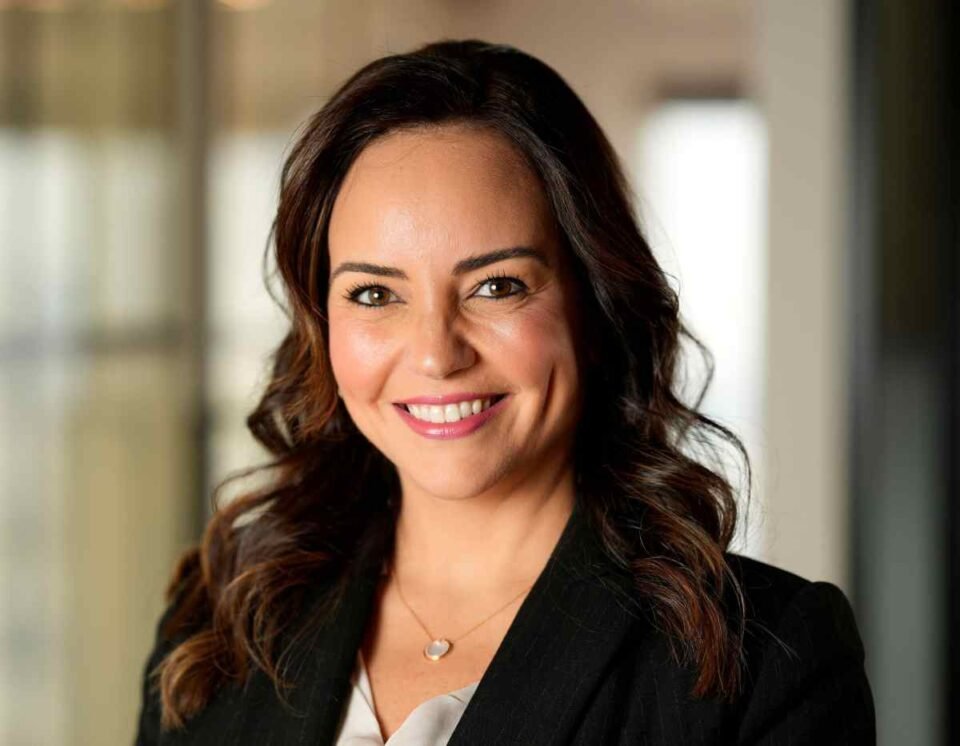
Meriam ElOuazzani, Vice President for Middle East, Turkey, and Africa at Censys, on leadership, breaking barriers, growth, and the evolving role of women in technology.
As part of Techitup Middle East’s International Women’s Day 2026 Leadership Series, we spotlight women leaders shaping the future of technology across the region. In this feature, Meriam ElOuazzani shares her professional journey, leadership insights, and advice for women in tech.
We are entering a defining AI-driven era. How is AI changing leadership expectations for women in tech?
Meriam ElOuazzani: AI is changing what it means to lead in this industry in a fundamental way. It’s not enough anymore to understand your domain, you have to understand how AI is reshaping it and make decisions about where it fits and where it doesn’t. That requires a different kind of judgment than we used to need.
What I’ve noticed is that this shift actually rewards a style of leadership that tends to be undervalued in traditional tech environments: the ability to hold complexity, bring people along, and make calls with incomplete information while staying grounded in the human impact. Those aren’t soft skills. In AI deployment, they’re load-bearing.
At Censys, we use AI to translate natural language into sophisticated internet intelligence queries, a capability that would have required deep technical specialization just a few years ago. But deploying that responsibly still requires leaders who understand the risk, can build the right guardrails, and can explain to a government CIO why the output can be trusted. AI raises the technical floor and changes the kind of judgment that matters at the top.
There’s also a real urgency here. Threats are becoming AI-powered, phishing attacks are more personalized, vulnerability scanning is faster, and malware is increasingly adaptive. Leaders in cybersecurity need to understand both sides of that equation. The women in this industry who are developing serious AI expertise right now are positioning themselves well. It’s one of the areas where early investment compounds quickly.
What is one structural barrier that still needs to change for women to scale into more C-level and board positions in tech?
Meriam ElOuazzani: The first promotion to manager. That’s where the gap opens, and it’s where it needs to close.
It might sound like a small thing compared to what happens at the top, but it isn’t. Who gets promoted to manager determines who will be available for director roles three years later, who will be available for VP roles five years after that, and who will realistically be considered for the C-suite a decade from now. If you don’t fix the first step, nothing else changes. The representation problem at the board level is just the compounded result of gaps that started much earlier.
What makes this particularly frustrating is that it’s not about ambition. The data on this is clear, and it matches what I’ve seen firsthand: women want to advance. The gap isn’t explained by personal choices. It’s explained by organizational systems that were designed, even if not deliberately, to favor certain networks and communication styles and definitions of ‘readiness.’ Those systems need to be redesigned.
At Censys, our executive team is 50% women, not because we set a target and called it done, but because the people making decisions about talent actively looked beyond familiar networks. That requires intention. It requires asking different questions about who’s ready and what ‘ready’ even means.
Board representation faces a similar issue. Progress has stalled at the major index levels, and without structural accountability, whether regulatory or from investors, organizations default to what’s familiar. The EU’s requirement for 40% women in non-executive board seats by mid-2026 is one example of what external pressure can achieve. But organizations shouldn’t be waiting for regulation to act on something this clear.
Was there a defining moment in your career that changed your trajectory?
Meriam ElOuazzani: Early in my career at Cisco, I was leading regional product sales for mobility across the Middle East, a period of rapid infrastructure expansion when a lot of major decisions were being made. I was frequently the only woman in the room, and not always the most senior person there. That can make you feel like you need to prove you belong by mirroring the people around you.
After a complex negotiation, a regional CTO pulled me aside. He said: ‘You don’t present technical solutions the way everyone else does. You connect infrastructure decisions to business outcomes and risk exposure. That’s what leadership teams actually need to hear.’
It sounds simple. But it crystallized something I hadn’t fully owned yet. I’d been doing it instinctively, translating the technical into the strategic, framing problems in terms of what a CFO worries about, or what keeps a board member up at night, but I hadn’t recognized it as a distinct skill. I thought I was just explaining things. He helped me see I was doing something specific that had value. I worked with poor leaders who believed that a woman should reconsider the importance of a career in their lives simply because they had chosen something else for their lives. However, I was fortunate to meet other true leaders in my past career and now at Censys who helped me look at my workplace differently.
That supported me to stop trying to communicate like everyone else in the room and to lean into what made my approach different. That shift shaped everything that followed. The META VP role feels like a direct line from that moment. I am glad to be part of the Censys team. A team that is ready to drive a transformation and empower customers with their major cybersecurity decisions.
What leadership trait has helped you most in navigating the tech industry?
Meriam ElOuazzani: Strategic patience combined with tactical urgency. I’ve found that most leadership failures come from getting that balance wrong in one direction or the other.
In cybersecurity, there’s enormous pressure to react to everything, every vulnerability disclosure, every threat report, every vendor claiming to have revolutionized security. Leaders who operate in pure reactive mode exhaust their teams and scatter resources. But leaders who move too slowly, waiting for perfect information or full consensus, miss windows and leave organizations exposed. Knowing which situation you’re in is the actual skill.
When the data shows that the average time between an attacker’s initial access and lateral movement across a network has dropped to under 30 minutes, you need to respond with urgency. Your detection and response capabilities have to work within that window. That’s not a strategic discussion; it’s an operational one, and hesitation is costly.
But when a new vendor promises to transform your security architecture overnight, that’s exactly where you need patience. At Censys, what we offer organizations is a clear view of what their infrastructure looks like from the outside, the same view an attacker has. That kind of persistent, comprehensive intelligence has to be evaluated carefully and integrated thoughtfully. Chasing every shiny new capability without that foundation doesn’t make you more secure. It makes you busier.
Building regional operations taught me this more than anything. You can’t shortcut the sequencing. Establish partnerships, demonstrate value with early customers, build channel relationships, then scale. Each phase requires patience to execute properly, and urgency to move before someone else does. The META region right now has serious security investment momentum. Strategic patience would mean waiting for conditions to be perfect. Tactical urgency means building while the window is open.
What practical advice would you give young women entering the AI and digital economy today?
Meriam ElOuazzani: Build your AI expertise now, not later. I don’t say this because it’s the fashionable thing to say; I say it because I’ve watched the qualification gap between what organizations need and what they can find open wider every year. The people who got in early are already being asked to lead. Certifications, internal projects, whatever gives you hands-on time with AI-driven tools in your specific domain, invest in that before it feels urgent. It will feel urgent sooner than you expect.
AI can be a force multiplier, but the person operating and directing it toward the desired outcome is critical. That means your role is increasingly more than just completing the job or “leading a project”. It means becoming the CEO of your function, understanding how your work impacts the organization’s strategic objectives, and then delivering the results. That ability will position you as an invaluable asset in the AI and digital economy.
Be deliberate about your network. The research on mentorship is consistent, and it matches my own experience: people with mentors advance further and stay in the industry longer. But most women never have a formal one, which means you have to build it yourself. Identify senior practitioners whose career path you respect, not just people who are successful, but people whose work you find meaningful. Ask for their time directly. Most will say yes. Join communities like Women in Cybersecurity Middle East. Go to conferences like Black Hat MEA. The relationships you build there will open doors your resume alone never would.
Choose your employer with real scrutiny. Ask about promotion timelines across demographics during interviews. Ask what percentage of leadership roles are held by women. Ask about retention. Organizations serious about developing all their talent will have this data and will be proud to share it. The ones who can’t answer or get defensive, that’s information too.
Specialize in areas where demand genuinely exceeds supply. Cloud security, AI-powered threat detection, and industrial control systems – these are domains with more open roles than qualified candidates. When you bring expertise in areas like that, you negotiate from a position of strength. At Censys, the analytical skills required for sophisticated threat hunting, understanding adversary infrastructure, and making sense of historical data across years of internet activity are genuinely hard to find. People who develop them have real leverage.
Finally, document everything in terms of outcomes. Not what you did, but what changed because you did it. ‘Led a project’ is forgettable. ‘Reduced mean time to detect by 40% through automation’ is not. That documentation becomes your evidence in every promotion conversation, every salary negotiation, every interview. Build the habit early.
The digital economy genuinely rewards expertise and execution. But until organizations fix the structural gaps that still exist, and many haven’t, you’ll need to be more deliberate about your career than you should have to be. That’s the honest version of the advice. Navigate it strategically, and don’t let anyone convince you that the barriers aren’t real.
This interview is part of the Techitup Middle East IWD 2026 Leadership Series, for women leaders who continue to accelerate innovation, champion diversity, and redefine the technology ecosystem across the Middle East and beyond.
