
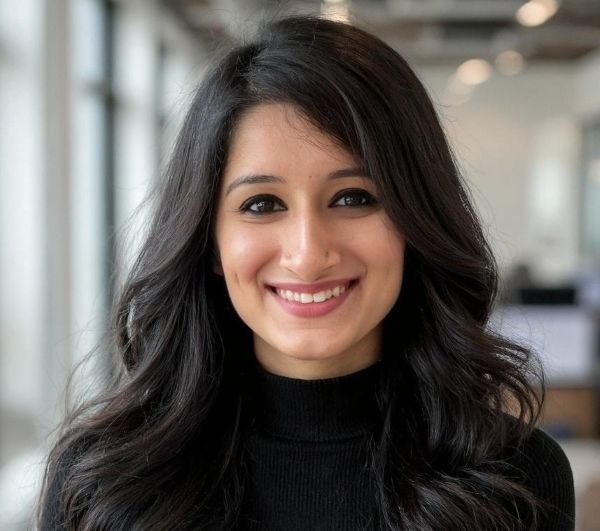
Riddhi Anilkumar, Regional Marketing Manager, MENA at JetBrains, on leadership, breaking barriers, inclusion, and owning AI.
As part of Techitup Middle East’s International Women’s Day 2026 Leadership Series, we spotlight women leaders shaping the future of technology across the region. In this feature, Riddhi Anilkumar shares her professional journey, leadership insights, and advice for women in tech.
We are entering a defining AI-driven era. How is AI changing leadership expectations for women in tech?
Riddhi Anilkumar: Honestly? I don’t think AI discriminates. It doesn’t care about your gender – it cares about your capability and your judgement in using it. So let’s drop the gendered narrative. It isn’t one.
What I think is worth talking about is that everyone is obsessing over using AI, but very few are asking the right question: where and how? Because not all AI is the same.
Perplexity is what I go to for fast, cited research and competitive scans. Gemini I use when I need to summarise heavy documents or work within interconnected workflows. Claude is where I go for nuanced, long-form thinking like building strategies, frameworks, working through complex messaging.
Same category of tool, very different strengths. Knowing the difference is what separates people who use AI from people who use AI “well”. And the “AI will take your jobs” conversation – I find that incredibly flat. Because, what it does is hand you back time. And that’s where it gets interesting.
Think about it – instead of defining yourself by your title, break your role down into everything it actually involves. Take my own role as a Regional Marketing Manager in tech – go-to-market strategy, pipeline generation, content, stakeholder relationships, brand positioning, campaign analysis and the list goes on.
Run AI through that list and roughly 70% – the process heavy and data oriented tasks, gets automated. The other 30% gets augmented – Deeper stakeholder relationships, sharper strategic thinking, handling nuanced objections and building trust with people who actually make decisions.
That’s where you show up differently.
Essentially, your job doesn’t disappear. But how you do it – and how well – changes entirely. And that gap between the people who figure that out and the people who don’t? That’s going to be the real career divide of this decade.
What is one structural barrier that still needs to change for women to scale into more C-level and board positions in tech?
Riddhi Anilkumar: Honestly? I’m not sure the barrier is gender anymore, and I know that’s an unpopular opinion. I’ve spent 12 years working in the Middle East, been young, been in leadership, been the only woman in the room, and gender never felt like the ultimate wall. I mean, we’re at a point where AI is replacing layers of human workforce wholesale, and we cant still be debating gender.
If you want to know what the real structural barrier is – it’s nationality. That’s the elephant in the room that needs addressing or an honest consideration. And we’re not even talking about just C-level or board positions here – this plays out at every level, senior, mid.
The most qualified person in the region isn’t always the one who gets the seat. And it has nothing to do with gender. It has everything to do with their passport. That bias? Quiet, deeply embedded and wildly uncomfortable to call out – is what’s actually keeping the right experience out of the right rooms.
Not just for women. For everyone. That to me is the barrier the industry needs to own. But it’s a much harder conversation to have, which is probably exactly why it’s not being discussed.
Was there a defining moment in your career that changed your trajectory?
Riddhi Anilkumar: My career has been defined by a series of bets I made on myself that nobody else was willing to make first. I’ve walked into rooms, challenged the status quo and turned those challenges into results that outlasted my own tenure at those companies.
I’ve built initiatives from scratch that were initially rejected by management, delivered beyond expectations and watched them get adopted as global strategy. I’ve also walked into companies within industries I knew absolutely nothing about and left them better than I found them.
But if I had to pick one – it’s joining JetBrains. Cybersecurity, construction, and now software development tooling – an industry more niche than the last. Developer tools are about as specific as it gets, yet they are the backbone of every single product, platform and technology being built in the world today.
Nothing gets created without someone writing code and nothing gets written well without the right tools. When JetBrains reached out I genuinely thought it was too big a leap – a 26 year old company trusted by NASA, Tesla, Google, VISA and 90 of the Fortune Global Top 100 companies? I didn’t think I had a chance.
But I interviewed. I got the job. And with it, the challenge of positioning one of the most respected software companies in the world on the radar of an entire region’s enterprises, partners and developer community. That doesn’t happen twice.
What leadership trait has helped you the most in navigating the tech industry?
Riddhi Anilkumar: The player-coach mentality, without a doubt. When you build yourself from scratch, there’s no other way. I’ve spent most of my career as a 1 person department, with no mentor, degree, formal training, not a technical bone in my body – in an industry that runs on technicality, ironically. And instead of that being a setback, it became my biggest advantage because I had no choice but to figure everything out myself.
So, I got into every part of the business – sales conversations, objection handling, technical discussions, leadership strategy. 12 years later I still show up the same way because you cannot paint a picture for someone else before you’ve seen it yourself.
Tech will evolve with or without you – I’ve watched it transform completely, first-hand.
Cybersecurity, cloud, automation, AI. Each wave didn’t just change the products, it changed the conversations, the buyers, the objections, the entire way you position value.
We went from protecting systems to building systems that think for themselves. Developers who once owned every single line of code they wrote, are now making a very different kind of decision – how much autonomy do you hand to an agentic AI that doesn’t just suggest the next line but understands the goal, breaks it down, writes across entire codebases, tests itself and iterates without being asked. The question was never whether this would happen. The question was always who would be ready when it did.
And that’s the whole point. Tech doesn’t care about your seniority. It cares about your relevance. The leaders who survived every wave weren’t necessarily the smartest in the room, they were the most willing to be uncomfortable.
The moment you think you’re too senior to be in the trenches, you’ve already lost the plot.
Lastly, what practical advice would you give young women entering the AI and digital economy today?
Riddhi Anilkumar: First – drop the gender narrative before you even walk in the door. The moment you enter a room expecting a barrier, you’ve already shrunk yourself. Say yes to everything, even what’s not in your job description. If you were hired as a content writer but someone asks you to monitor social analytics, do it. That’s how you evolve from a content creator to someone who understands data. Nobody who stayed in their lane ever outgrew it.
Learn the language of the industry you’re in, even if you never speak it fluently. You don’t need to code but you need to understand enough to hold a credible conversation with someone who does.
That alone puts you ahead of most people in the room. Use AI. Unapologetically. You aren’t taking a shortcut; you’re taking the lead. You belong to a generation that is entering the workforce with a tool that automates the mundane and hands you back time to focus on creativity, strategy and the things that actually require a human brain.
And your soft skills – relationship building, communication, reading a room – they’re not secondary skills anymore. They are the 30% that AI cannot touch and they are becoming more valuable by the day.
Your non-linear background? Thats an asset, not a liability, because the AI industry doesn’t just need engineers. It needs people who think differently, communicate differently and bring perspectives that a straight line from university to tech job simply cannot produce.
The most unconventional paths often build the most well-rounded leaders. Mine did.
This interview is part of the Techitup Middle East IWD 2026 Leadership Series, for women leaders who continue to accelerate innovation, champion diversity, and redefine the technology ecosystem across the Middle East and beyond.
