
Insights from the Techitup Middle East IWD 2026 Leadership Series on AI, leadership, and the evolving pathways for women in technology.
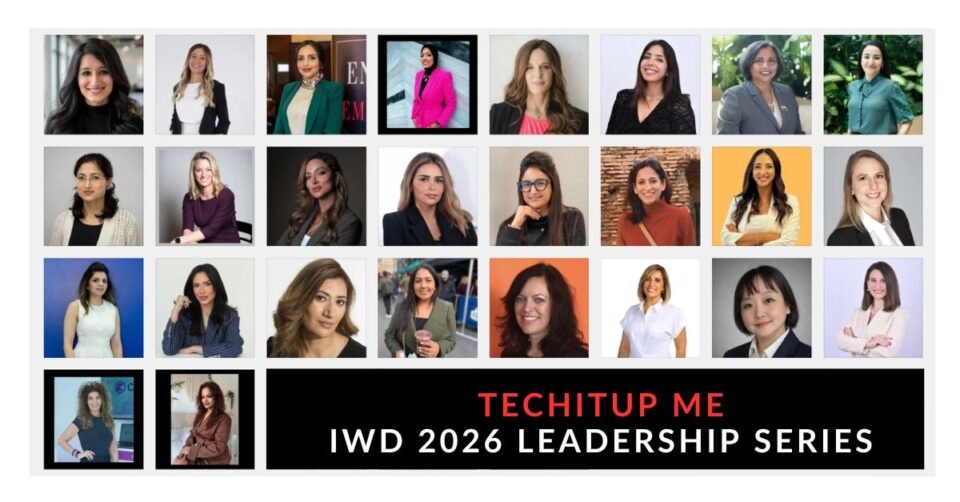
As part of the Techitup Middle East IWD 2026 Leadership Series, we spoke with 30+ women leaders from across the MEA technology ecosystem, including enterprise IT, cybersecurity, AI, cloud, and digital transformation. They shared their perspectives on the opportunities in this AI-driven world, the changes still needed to create stronger leadership pathways, and the experiences that shaped their careers.
Across these conversations, several common themes emerged — from how AI is changing leadership expectations to the growing importance of sponsorship, operational experience, and confidence in navigating the tech industry. Many leaders also shared personal career lessons and practical advice for the next generation entering the digital economy.
Leaders Featured in the Techitup ME IWD 2026 Leadership Series
What 30+ Women Leaders Told Us
- AI is redefining leadership expectations, making adaptability, curiosity, and continuous learning essential.
- Sponsorship—not just mentorship—matters when it comes to helping women advance into boardrooms and senior leadership roles.
- Operational and revenue-driving roles remain key stepping stones to C-suite and board positions.
- Confidence, resilience, and advocacy were frequently highlighted as critical leadership traits.
- Taking bold career leaps and embracing new opportunities often became defining moments for many leaders.
- Young professionals should not wait until they feel fully ready—growth often happens while learning on the job.
AI is Reshaping Leadership Expectations
As organizations move deeper into the AI era, leadership expectations across the technology sector are evolving quickly. Many leaders said professionals today must be ready to adapt to emerging technologies and continuously build new skills.
Rather than seeing AI as something overwhelming, many encouraged people to approach it with curiosity and openness. Asking the right questions, understanding how technology solves real business problems, and ensuring responsible adoption were seen as key leadership responsibilities in this new era.
Sponsorship and Operational Roles Matter for Leadership Progression
When discussing barriers to senior leadership, many leaders highlighted the importance of access to operational roles. Positions involving engineering leadership, product management, revenue ownership, or P&L responsibility are often stepping stones to executive and board-level positions.
Several leaders noted that organizations can play an important role by creating more opportunities for women to gain experience in these high-impact roles earlier in their careers.
Another theme that came up frequently was the difference between mentorship and sponsorship. While mentorship provides guidance, sponsorship involves senior leaders actively advocating for individuals when leadership opportunities arise. Stronger sponsorship networks can help accelerate women’s progress into senior decision-making roles.
At the same time, some perspectives emphasized that leadership positions—especially board roles, should ultimately be determined by capability, experience, and merit. Also, views like nationality should not be a barrier in determining who gets a seat at the table.
Career-Defining Moments Often Come from Taking the Leap
Many leaders shared pivotal moments that shaped their career journeys. These often involved stepping into unfamiliar roles, taking on challenging assignments, or accepting opportunities that pushed them beyond their comfort zones.
Support from mentors, colleagues, and family members also played an important role in enabling many leaders to pursue these opportunities. For many, taking on new responsibilities at the right moment became a turning point that accelerated their careers.
Confidence, Curiosity, and Resilience Define Leadership
When asked about the traits that helped them succeed in the tech industry, leaders frequently mentioned confidence, resilience, curiosity, and adaptability.
Being willing to speak up, advocate for oneself, and stay open to learning were common themes. Several leaders also noted that effective leadership today requires not only technical understanding but also collaboration, empathy, and the ability to navigate constant change.
Advice for the Next Generation Entering the AI Economy
For young women considering careers in technology, the advice shared by these leaders was practical and encouraging.
Many stressed the importance of staying curious about emerging technologies and continuously building new skills. Asking questions, seeking mentors, and building strong professional networks were also commonly recommended.
Perhaps the most consistent message was not to wait until feeling completely ready before taking on new challenges. Confidence and capability often grow through experience, and learning on the job is an important part of career growth.
Conclusion
The perspectives shared by these 30+ leaders reflect a technology industry that is evolving rapidly while continuing to work toward more inclusive leadership pathways. As AI reshapes industries and creates new opportunities, women leaders across the region are playing an increasingly important role in guiding innovation and shaping the future of technology.
The Techitup Middle East IWD 2026 Leadership Series celebrates these voices and the impact they continue to make across the region’s technology landscape.
Read inspiring stories from women leaders in tech from across Middle East in our special IWD 2026 Leadership Series.
